Keratoconus

What is keratoconus?

Degeneration means damage

Keratoconus (KCN) is a corneal degeneration characterized by progressive thinning and deformation of the cornea. These changes lead to a gradual decline in visual acuity.

In keratoconus, the thinning is localized in the central part of the cornea. In another condition—Pellucid Marginal Degeneration (PMD)—the thinning occurs at the periphery of the cornea. These degenerations form a continuous spectrum of stages and disease progression.

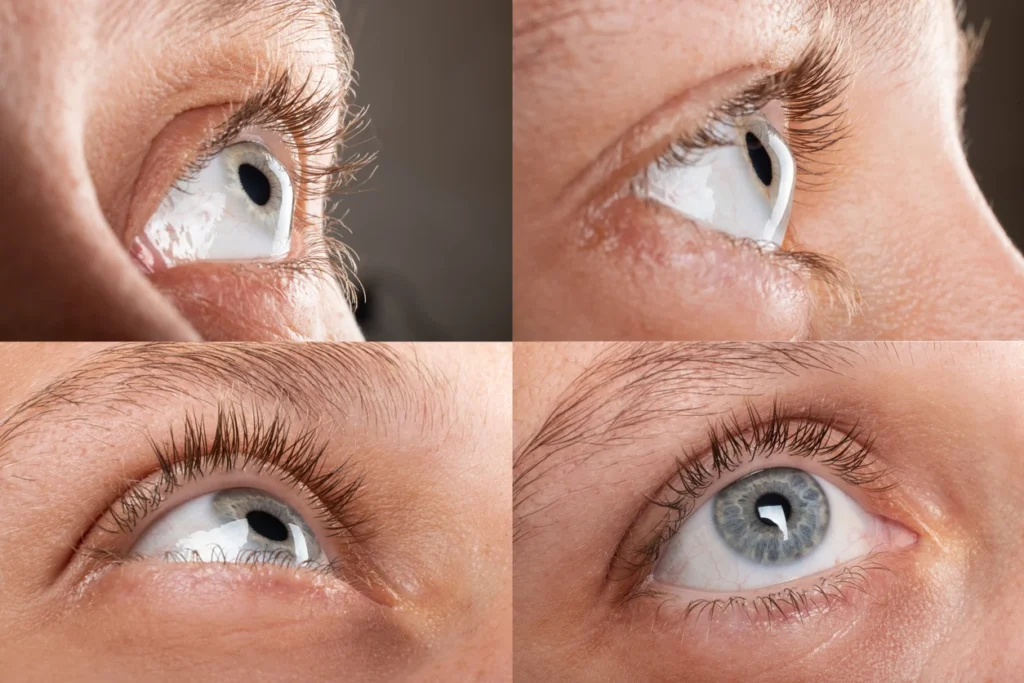
Do you “search” for a sharp image by changing your viewing angle?

Is your vision stable?

There are two distinct forms of keratoconus: “forme fruste” (a rarer, latent, and inactive form) and “keratoconus” (the full-blown symptomatic form).

Keratoconus presents with characteristic visual symptoms:

How do we diagnose and treat keratoconus?

Keratoconus is our specialty

Accurate corneal diagnostics and proper patient qualification are the “clue” to effective treatment and excellent, predictable results.
The foundation of keratoconus diagnostics lies in corneal tomography and hysteresis.

TOMOGRAPHY IS A THREE-DIMENSIONAL MAP OF THE CORNEA, WHILE HYSTERESIS IS AN EXAMINATION OF CORNEAL ELASTICITY, WHICH CHANGES, AMONG OTHER CONDITIONS, IN KERATOCONUS.

In our treatment, we leverage the fact that the combined action of different therapies produces a much more effective clinical outcome (synergy) compared to using each method separately.

Vigilance is essential!!!

If you have symptoms, seek an examination urgently. Get checked, have your eyes examined!!!

The early symptoms of keratoconus can easily be overlooked or ignored if you are not familiar with them. On the other hand, knowing them may help a patient notice signs of the disease at a very early stage, giving them a chance to stop its progression early.

Do not ignore the first symptoms of keratoconus:

Can you live a normal life with keratoconus?

Why does keratoconus impair vision?

Keratoconus is not a sentence and not a diagnosis that pushes you to the sidelines of life. Proper treatment gives you a chance for better vision and an improved quality of life. Keratoconus impairs vision by causing an irregular shape of the cornea. An irregular corneal shape leads to an irregular refractive error in the patient’s eye (irregular astigmatism). Irregular refractive errors cannot be effectively corrected with optics. All treatment efforts in keratoconus aim to convert an irregular refractive error into a regular one that can be corrected optically.

You have a significant impact on the progression of your disease

What situations should you avoid?

You must understand what causes the disease to progress. In its current state, your eye can be compared to a football where the inner tube is bulging out because one of the outer panels has been removed. This “inner tube” is the weakest part of your cornea, which must not be subjected to physical deforming factors.

You also cannot allow the pressure inside your eyes to increase.
Until you secure your eyes against the progression of the disease with the appropriate procedure, you must avoid the following:

Keratoconus treatment methods

Corneal Cross-linking

Action or disability? The choice is yours…

Cross-linking (CXL) is a procedure that induces the formation of additional bonds in the cornea, thereby strengthening the tissue. It is performed using Riboflavin (vitamin B2) and ultraviolet A (UV-A). This structural reinforcement is necessary to compensate for the weakening of the corneal collagen structure caused by keratoconus. The procedure preserves the cornea in the state it is in immediately prior to the treatment. Therefore:
  • The procedure is indicated in early-stage cases of keratoconus, where the corneal profile is still normal and visual acuity remains unaffected by the progression of the disease.
  • Certain variations of the procedure (e.g., CXL in corneal channels, CXL in a corneal pocket) can be used to enhance the effects of other vision-improving treatments for keratoconus, such as intracorneal ring segments (ICRS).
  • The procedure may be performed following corneal surface reconstruction to maintain the beneficial changes achieved.
  • The treatment is typically not applied to corneas that are significantly deformed due to the progression of the disease. In these advanced stages, the procedure is sometimes performed after the implantation of intracorneal ring segments (ICRS) to stabilize their positive effects.

Laser corneal
epithelium removal

Up to 10 seconds

Riboflavin corneal
saturation

12–18 minutes

Corneal UV irradiation

5–30 minutes

Corneal
stabilization

4–5 months

Change your fate while you still can

Intracorneal Ring Segments (ICRS) are implants made of a highly biocompatible polymer (PMMA). ICRS rings offer patients with advanced keratoconus a chance to avoid an invasive corneal transplant in the future. It is an opportunity for such patients to achieve functionally good vision without the burden of transplantation, which is sometimes complicated by graft rejection and results in uncertain or unpredictable postoperative visual acuity.

Intracorneal ring segments work by being implanted along the periphery of the cornea (intrastromally), which leads to a controlled flattening of the central part of the cornea they are centered around. If the ICRS are centered relative to the sector severely deformed by the disease, the interaction between the implant and the elastic tissue will reshape that sector toward a more optically favorable curvature.

In order of importance, the goals of the procedure are:

  •  to avoid the necessity of a corneal transplant
  • to improve vision without optical correction (achieving independence from correction)
  • to improve vision with optical correction
  • to reduce shortsightedness (myopia)

Creation of
the corneal channel

12 seconds

Intracorneal cross-linking
(optional)

30 minutes

Ring segment implantation
into the channels

1 minute

Corneal
stabilization

12 – 14 months

Is laser vision correction contraindicated in cases of keratoconus?

For many years, keratoconus was listed as an absolute contraindication for laser vision correction. After years of research and significant progress in diagnostics and treatment, in the current era of modern ophthalmology, we know that for some patients, a carefully calculated and appropriately selected vision correction yields very good and predictable results. In addition to removing or significantly reducing the refractive error, it has a therapeutic effect by improving the regularity of the keratoconic corneal surface. Even a slight smoothing of the corneal surface can lead to a significant improvement in visual acuity.

Astigmatism and myopic astigmatism are the most common vision defects found in patients with keratoconus. In many cases, these defects can be partially or even completely corrected using 

laser vision correction technology. Depending on the laser used, two specific treatment protocols are available: the Athens Protocol and the Aztec Protocol.

Improvement in corneal
topographhy

Minimization of the
refractive error

Procedure time

15-20 minut

Corneal
stabilization

12-18 months

Epi-off, Epi-on

Types of CXL

Standard CXL involves the removal of the corneal epithelium (epi-off type). CXL can also be performed without removing the epithelium (epi-on). Epi-on CXL is less invasive and causes less discomfort, but it can only be used in selected cases. Beyond its standard application, CXL can be performed in corneal channels or in a corneal pocket. Irradiation can be carried out using a standard or a gradient approach.

Complex Cases

We handle the most challenging cases, including complications following refractive surgeries performed elsewhere.

Comprehensive Range of Procedures

The widest selection of procedures in refractive surgery and keratoconus treatment.

Marcin Smorawski, MD, PhD

Creator of original, proprietary surgical methods for refractive surgery and keratoconus, including ex-im and biman.

Scientific Collaboration

In partnership with the world's leading corneal researchers.

Read our patient testimonial

aa profile picture
aa
13:26 02 Apr 26
I recommend it 100%. Thanks to specialists like you, I regain my faith in the medical profession. 10/10. KK
Bartosz Bober profile picture
Bartosz Bober
11:48 24 Sep 25
I had the SMILE procedure and I'm delighted. The doctor is a true professional – everything was thoroughly explained to me before the surgery, and I felt safe and at ease during the procedure. The procedure itself was quick and painless, and the results exceeded my expectations – my vision is excellent, better than ever before. Post-operative care was also top-notch; I could always count on answers to my questions and support.

I wholeheartedly recommend him to anyone considering vision correction – it was one of the best decisions of my life!
Renata profile picture
Renata
19:12 10 Jul 25
Very good doctor. Friendly staff. Thanks to the correction, I have a new life. I highly recommend it.
Olena Shmanko profile picture
Olena Shmanko
12:52 06 Mar 25
I highly recommend Dr. Marcin as a top eye surgery specialist in Warsaw.
The procedure was totally painless and the service l have gotten was great.
Now, l can see this World properly thanks to the Doctor. My sincere recommendation to everyone.
Monika K profile picture
Monika K
08:53 23 Dec 24
I had a lot of concerns about vision correction. I was afraid something would go wrong and I'd have to deal with the consequences. Ultimately, I went for a consultation with Dr. Smorawski on a recommendation, as he had performed the procedure on a family member a few years ago. And that was the moment I believed him. Dr. Smorawski is full of empathy and patience, personally greets and gets to know each patient, answers all questions honestly, is extremely knowledgeable and professional, and his personalized approach makes you feel completely cared for. This isn't a chain store where you have to wait for a hotline to be connected, so in case of an emergency, you can count on him.

Ms. Agata, who supports the doctor, also inspires great trust, offers advice, and patiently answers questions. 😉
I've been having my vision correction done for a few weeks now, from -3 to 0, and my quality of life has improved significantly. I can only say that I regret waiting so long. I would choose the same place again, and only Dr. Smorawski.
I recommend it 100%.
Catherine Jofi profile picture
Catherine Jofi
09:43 20 Aug 24
If you are looking for an ophthalmologist I highly recommend the Smorawski Okulistyka clinic.

Dr. Marcin Smorawski performed my SMILE procedure lately, and I had the pleasure of receiving his excellent care. From the very first consultation, Dr. Smorawski impressed me with his professionalism. He patiently answered all of my questions and took the time to thoroughly explain every step of the process. His ability to make complicated medical concepts understandable gave me the confidence to feel well-informed and secure in my choice.
The results of the LASIK surgery have been life-changing, and I owe it all to Dr. Smorawski’s expertise.

Keratoconus
- consultation with a specialist

Are you struggling with keratoconus and want to effectively treat this eye condition? Contact us to determine the treatment method best suited to your case.

WhatsApp

The corneal cross-linking procedure can strengthen the cornea up to threefold, and its effect is most significant in the anterior (front) part of the cornea. The cornea is reinforced through the formation of additional bonds between successive layers of collagen (cross-links). The procedure initiates the process of creating these additional bonds, and the induced cross-linking continues to develop for several months after the treatment.

Intracorneal Ring Segments (ICRS) work by flattening and tensioning the central cornea. Due to this flattening effect, they are able to significantly reduce nearsightedness (by up to 5–6 diopters). The tensioning effect, in turn, may help stop the progression of an active keratoconus. The thickness of an ICRS is only a fraction of a millimeter (between ⅛ and ¼ of a millimeter). ICRS are implanted once for a lifetime; the implants do not require replacement.Intracorneal Ring Segments (ICRS) work by flattening and tensioning the central cornea. Due to this flattening effect, they are able to significantly reduce nearsightedness (by up to 5–6 diopters). The tensioning effect, in turn, may help stop the progression of an active keratoconus. The thickness of an ICRS is only a fraction of a millimeter (between ⅛ and ¼ of a millimeter). ICRS are implanted once for a lifetime;
the implants do not require replacement.

Vision correction in keratoconus serves a dual purpose. The first, and most desired by the patient, is to eliminate or reduce the refractive error. The second is to improve the patient’s best-corrected vision (the maximum vision achievable without contact lenses or glasses). This second, purely medical objective of the procedure plays a significantly greater role in improving the patient’s quality of life.