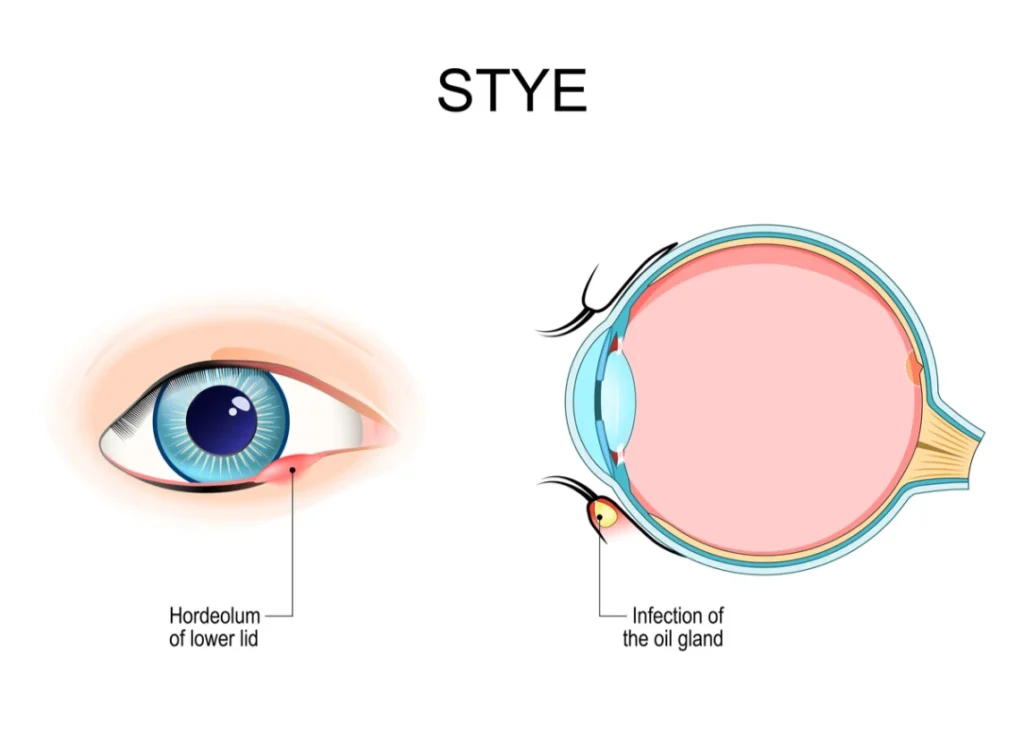
A chalazion is an inflammation of the Meibomian gland. Meibomian glands are located in the marginal parts of the eyelids. These glands produce a secretion that is an essential component of the tear film. Thanks to the Meibomian secretion, the tear film remains stable and covers the entire surface of the eye with a thin
layer between successive blinks. Due to the fatty nature of the Meibomian secretion, it can sometimes thicken and stagnate within the glands. Chronic stagnation can lead to a blockage of the gland’s duct, which continues to produce secretion despite the obstruction. This results in rapid enlargement of the gland, an inflammatory response around it, and sometimes pressure from the enlarged gland on the cornea, leading to blurred vision.
The increase in the density of Meibomian secretions is multifactorial and linked to: hormonal status, the body’s lipid metabolism, the condition of the eyelids and skin, and the body’s hydration levels.
In its early stages, a chalazion can be treated with heat compresses, massage, and the application of steroid eye drops. After several weeks, the capsule of the inflamed gland becomes thicker and significantly less
responsive to conservative treatment. At that point, the only effective treatment option is the surgical removal of the affected gland along with its capsule.
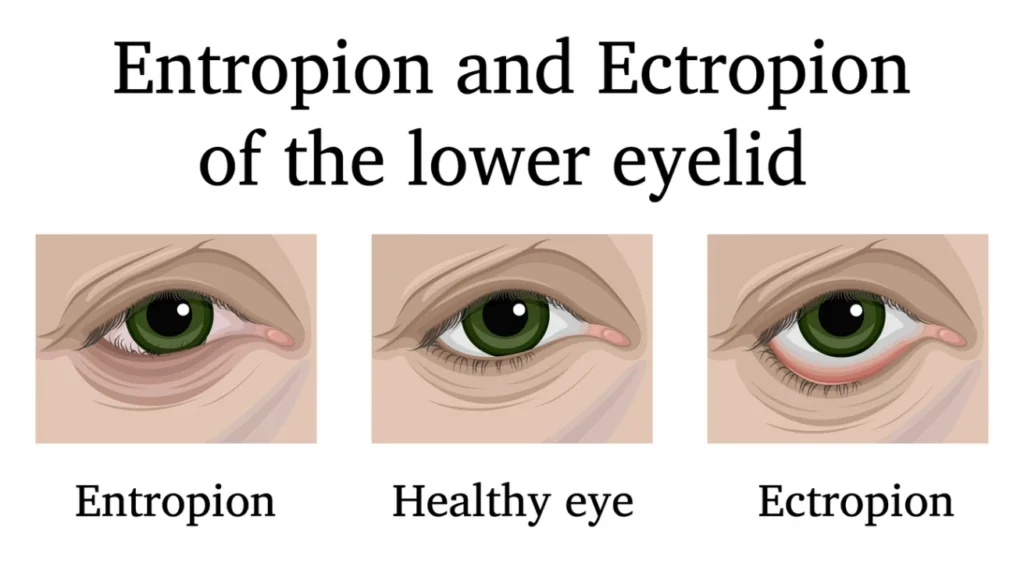
Entropion is an abnormal positioning of the lower eyelid and lash line, where they fold inward toward the surface of the eye. This inward turning causes chronic irritation, redness, and tearing of the eye. Entropion is most commonly a result of eyelid skin laxity and loss of tension, though it is sometimes caused by scarring or nerve palsy. Beyond simple discomfort, the folding of the eyelid can lead to chronic
inflammation of the conjunctiva and cornea, as well as corneal ulceration. In extreme cases, neglected and untreated corneal ulcers can even lead to endophthalmitis (inflammation of the interior of the eye).
Ectropion is an abnormal positioning of the lower eyelid, characterized by its outward turning and pulling away from the surface of the eyeball. The outward folding of the lower eyelid usually results in chronic dryness, irritation, and tearing of the eye. The causes of ectropion include scarring, chronic inflammation, and nerve palsy.
Surgical treatment of ectropion, which is usually necessary to resolve advanced stages of the condition, involves shortening the lower eyelid along with the skin-muscle apparatus or the application of so-called everting sutures.
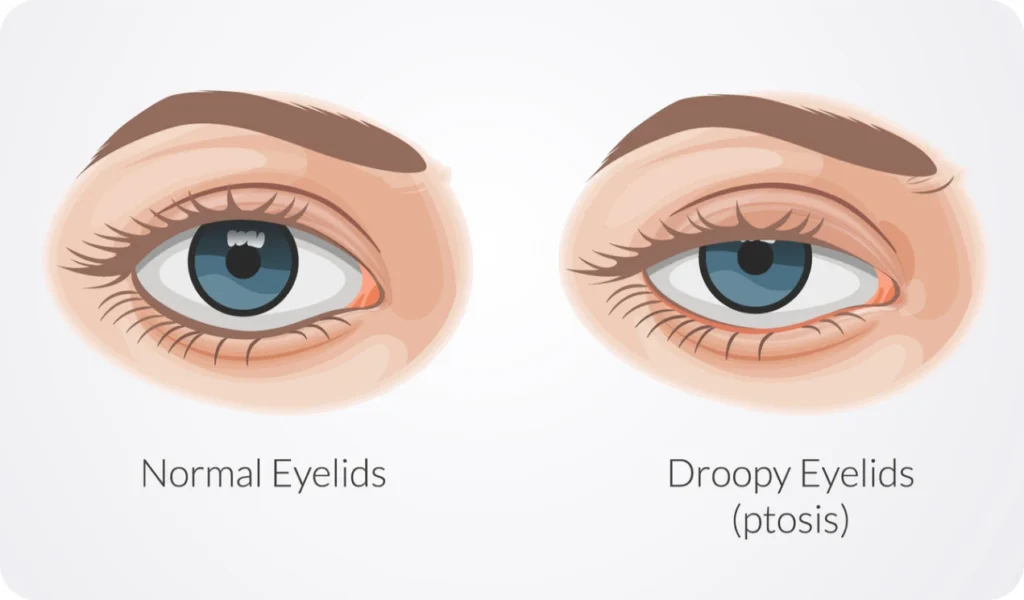
Under physiological conditions, the upper eyelid should cover 1–2 millimeters of the upper part of the cornea and iris. In such cases, the distance between the eyelid margin and the center of the pupil is 4.5 millimeters. If this distance decreases to 2–3 millimeters, it is considered mild ptosis, whereas a distance of 0–2 millimeters indicates advanced drooping.
In addition to a significant cosmetic effect and eye asymmetry, a drooping eyelid also causes a substantial restriction of the visual field. This condition makes driving impossible and causes very high levels of discomfort.


Are you struggling with an eyelid problem and want to effectively get rid of it? Contact us to determine the treatment method best suited to your case.