Notice: Function _load_textdomain_just_in_time was called incorrectly. Translation loading for the complianz-gdpr domain was triggered too early. This is usually an indicator for some code in the plugin or theme running too early. Translations should be loaded at the init action or later. Please see Debugging in WordPress for more information. (This message was added in version 6.7.0.) in /home/platne/serwer289828/public_html/autoinstalator/smorawskiokulistyka.pl/wordpress85328/wp-includes/functions.php on line 6131
Presbyopia age-related farsightedness – Smorawski Okulistyka

Presbyopia - Age-related farsightedness

Sooner or later, presbyopia will affect everyone.

Presbyopia, also known as age-related farsightedness, is a condition that causes a decline in near vision. Its onset occurs earlier in individuals with hyperopia, and early symptoms (prodromes) can appear in patients as early as age 35. Initially, these symptoms may only affect specific, more demanding tasks, such as threading a needle or trimming nails. Over time, the symptoms extend to all near-vision activities, which we gradually begin to perform at an increasing distance from our eyes.

Do you find yourself holding text further away?

The phenomenon of presbyopia is the resul t of weakened accommodation. During near-vision tasks, our lens becomes more spherical, providing the additional power needed for reading and close-up work. This change in the lens’s shape is driven by the contraction of another key component of the mechanism—the ciliary muscle. As the years pass, the ciliary muscle weakens, and the lens becomes increasingly rigid. This significantly reduces the lens’s ability to deform during near work, consequently increasing our dependence on glasses for close-up activities.

Reading glasses aren't your only option

Presbyopia progresses steadily from its onset around age 35–40 until the age of 60–65. Typically, the condition increases by 0.5 dioptres every five years. By age 60–65, the near-vision deficit reaches its maximum value of +3.5 dioptres.
It is important to emphasize that the power of reading glasses depends not only on the stage of presbyopia but also on the patient’s distance vision prescription. Hyperopia (farsightedness) is added to the presbyopic value, while myopia (nearsightedness) is subtracted from it.
Consequently, a 65-year-old myopic patient with a -1.0 dioptre distance correction will require approximately +2.5 dioptres for reading. In contrast, a patient of the same age with +1.0 dioptre hyperopia will need reading glasses with a power of approximately +4.5 dioptres.

Presbyopia cannot be halted through medication or eye exercises. However, advanced treatment options are available that, in many cases, allow patients to maintain clear near vision while preserving sharp distance acuity

The mechanism of accommodation

When focusing on near objects, the ciliary muscle contracts, allowing the lens to change its shape (becoming thicker and more convex). This provides the additional optical power required for near-vision tasks. Conversely, when viewing distant objects, the ciliary muscle relaxes, enabling the lens to return to its original state (becoming thinner and flatter).
As we age, the accommodation mechanism gradually weakens. The first symptom of this decline is a delayed focusing effect (similar to a slow “zoom-in”) when shifting one’s gaze from distance to near or vice versa.

Treatment and Correction of Presbyopia

Vision Correction Methods for Presbyopia

FemtoLasik

Who is FemtoLasik for?

  • Patients with farsightedness (hyperopia) up to +6.0 diopters.
  • Patients with astigmatism up to 6.0 diopters, with an accompanying spherical error up to -10.0 diopters.
  • Patients with near vision impairment (presbyopia).
  • The procedure can also be used for shortsightedness (minus errors), although this is less common due to the availability of the SMILE technology alternative.

Why choose FemtoLasik?

  • High EMO (Effective Modifying Power) coefficient:
    This method is highly effective for treating vision impairments that are more resistant to correction, such as farsightedness (hyperopia), hyperopic astigmatism, and complex astigmatism.
  • Easy access for future adjustments: Due to the ease of accessing the treatment zone (laser area), this method is an excellent choice for patients who may require re-correction in the future (those with farsightedness developing after age 40 or presbyopia)
  • Combined correction protocols: FemtoLasik allows for the simultaneous application of protocols designed to correct both distance and near vision, such as Presbyond and Presbymax.

Shortsightness (Myopia), Astigmatism, Myopic Astigmatism, Hyperopic Astigmatism, Presbyopia

Who is Presbyond for?

  • Patients with shortsightedness (myopia) up to -8.0 diopters.
  • Patients with farsightedness (hyperopia) up to +4.0 diopters.
  • Patients with myopic astigmatism up to -2.0 diopters, with an accompanying spherical error up to -10.0 diopters.

Why choose Presbyond?

  • Technically, Presbyond is identical to the Femto-LASIK method. These techniques differ only in their ablation profile (the ablation profile refers to the laser’s effect on the corneal surface or the specific change in the corneal shape induced by the laser).
  • The specialized ablation profile used in the Presbyond method provides the patient with additional near-vision power compared to standard monovision.
  • Presbyond allows for quick and easy access to the ablation zone (the area where the laser treatment is performed) should a re-correction be necessary due to the age-related progression of near-vision impairment.

Shortsightness (Myopia), Farsightedness (Hyperopia), Astigmatism, Myopic Astigmatism, Presbyopia

Read our patient testimonials

aa profile picture
aa
13:26 02 Apr 26
I recommend it 100%. Thanks to specialists like you, I regain my faith in the medical profession. 10/10. KK
Bartosz Bober profile picture
Bartosz Bober
11:48 24 Sep 25
I had the SMILE procedure and I'm delighted. The doctor is a true professional – everything was thoroughly explained to me before the surgery, and I felt safe and at ease during the procedure. The procedure itself was quick and painless, and the results exceeded my expectations – my vision is excellent, better than ever before. Post-operative care was also top-notch; I could always count on answers to my questions and support.

I wholeheartedly recommend him to anyone considering vision correction – it was one of the best decisions of my life!
Renata profile picture
Renata
19:12 10 Jul 25
Very good doctor. Friendly staff. Thanks to the correction, I have a new life. I highly recommend it.
Olena Shmanko profile picture
Olena Shmanko
12:52 06 Mar 25
I highly recommend Dr. Marcin as a top eye surgery specialist in Warsaw.
The procedure was totally painless and the service l have gotten was great.
Now, l can see this World properly thanks to the Doctor. My sincere recommendation to everyone.
Monika K profile picture
Monika K
08:53 23 Dec 24
I had a lot of concerns about vision correction. I was afraid something would go wrong and I'd have to deal with the consequences. Ultimately, I went for a consultation with Dr. Smorawski on a recommendation, as he had performed the procedure on a family member a few years ago. And that was the moment I believed him. Dr. Smorawski is full of empathy and patience, personally greets and gets to know each patient, answers all questions honestly, is extremely knowledgeable and professional, and his personalized approach makes you feel completely cared for. This isn't a chain store where you have to wait for a hotline to be connected, so in case of an emergency, you can count on him.

Ms. Agata, who supports the doctor, also inspires great trust, offers advice, and patiently answers questions. 😉
I've been having my vision correction done for a few weeks now, from -3 to 0, and my quality of life has improved significantly. I can only say that I regret waiting so long. I would choose the same place again, and only Dr. Smorawski.
I recommend it 100%.
Catherine Jofi profile picture
Catherine Jofi
09:43 20 Aug 24
If you are looking for an ophthalmologist I highly recommend the Smorawski Okulistyka clinic.

Dr. Marcin Smorawski performed my SMILE procedure lately, and I had the pleasure of receiving his excellent care. From the very first consultation, Dr. Smorawski impressed me with his professionalism. He patiently answered all of my questions and took the time to thoroughly explain every step of the process. His ability to make complicated medical concepts understandable gave me the confidence to feel well-informed and secure in my choice.
The results of the LASIK surgery have been life-changing, and I owe it all to Dr. Smorawski’s expertise.

Presbyopia
- consultation with a specialist

Are you struggling with presbyopia and want to effectively get rid of this vision problem? Contact us to determine the treatment method best suited to your case.

WhatsApp

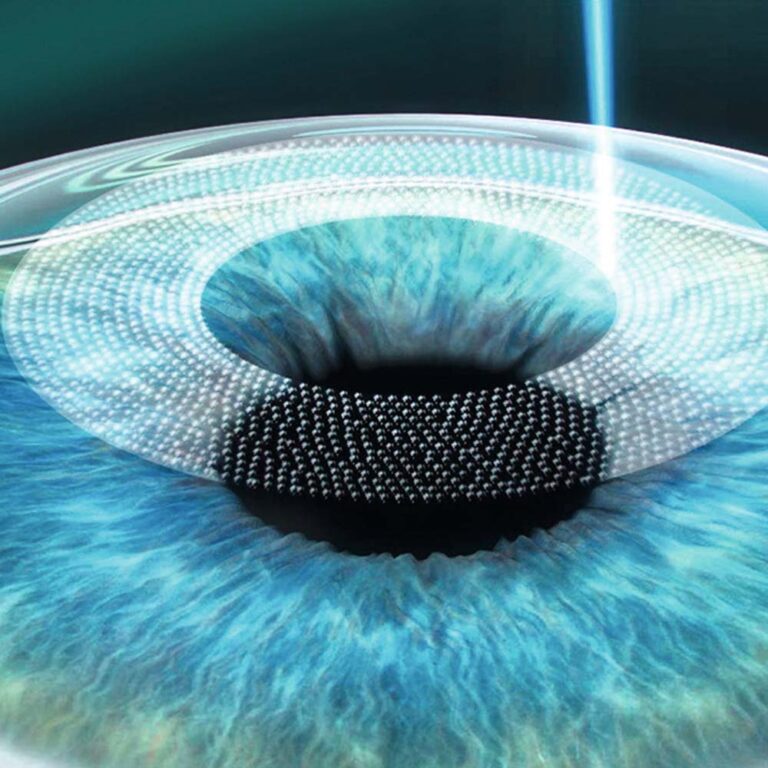
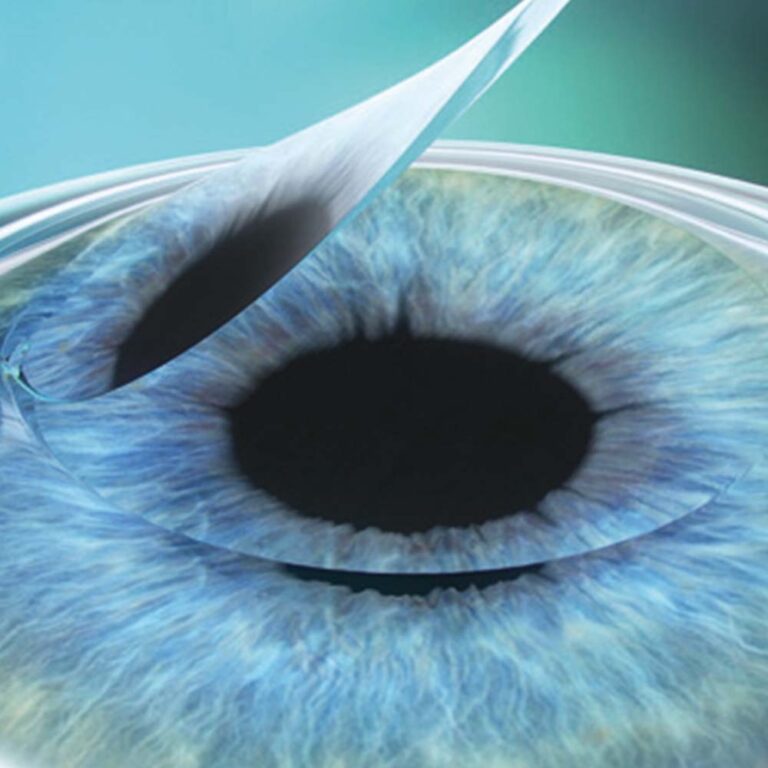
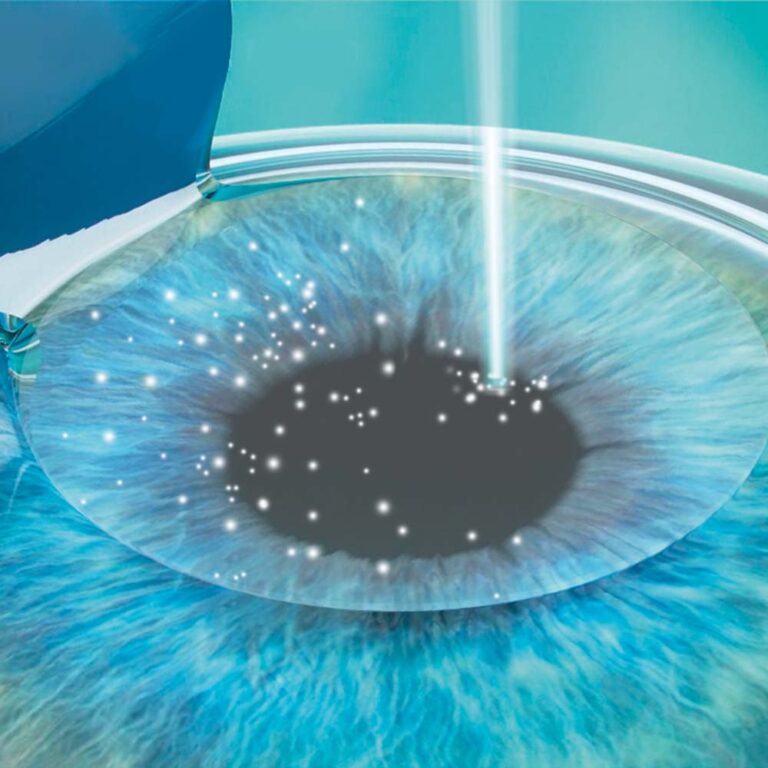
Hyperopia, hyperopic astigmatism, and astigmatism are the most resistant refractive errors to correct. To eliminate farsightedness, a change is required that results in increased corneal steepening. Steepening the corneal dome is significantly more challenging to achieve with laser correction than flattening it. This creates the need for a procedure with a higher EMO (Effective Modifying Power), which is more effective at reshaping the tissue. Femto-LASIK is such a procedure. It is a two-stage treatment. The first stage, which involves creating a corneal flap, simultaneously reduces the rigidity (softens) of the cornea. Once prepared this way, the cornea becomes much more pliable and susceptible to reshaping during the second stage. In the second stage, an excimer laser is applied to the corneal stroma exposed under the flap. In the treatment of presbyopia, we take advantage of the practicality and easy access provided by the presence of the corneal flap. As we age, the demand for visual power for near-distance work increases. To meet this growing need, we can compensate for the increasing near-vision impairment through a minimally invasive and simple method: a flap lift.

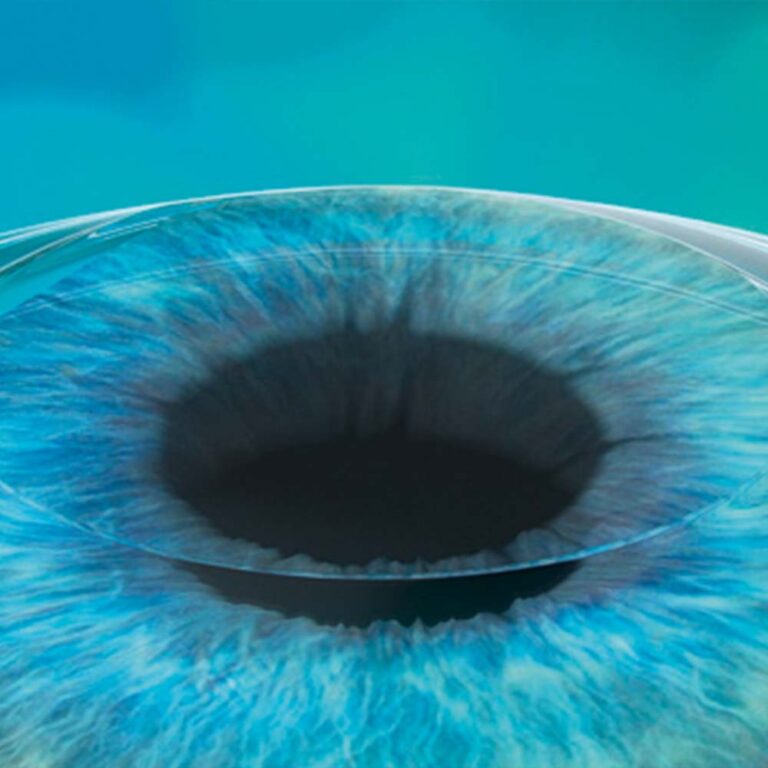
Presbyond gives the cornea a specific shape. After treatment with this method, the cornea has varying curvatures in different areas. This allows for increased corneal power in the specific zones used for reading, providing the patient with the additional boost needed for near-distance work.

However, not every patient is a candidate for the Presbyond procedure. Its effectiveness and feasibility depend on the initial corneal parameters, primarily the pre-operative corneal curvature, which is measured and evaluated at critical points.